A Landmark Raise in AI Infrastructure
The newly secured capital marks one of the largest recent funding rounds in the AI infrastructure space. The round was co-led by three major investment firms, with participation from a star-studded roster of institutional investors and sovereign wealth funds. The influx of capital signals strong institutional confidence in the company’s ability to meet the surging demand for compute resources needed to train and run AI systems.
Strengthened Board Reflects Growing Ambitions
Alongside the fundraise, Crusoe expanded its board of directors with three high-profile additions. The new members bring deep expertise in cloud infrastructure, digital energy systems, and electric vehicle manufacturing. One of them, a co-founder of a major battery and energy storage company, had already invested in Crusoe several years ago and became the firm’s first customer for its energy storage offerings. This close relationship underscores how Crusoe’s origins in energy and computing continue to shape its strategic direction.
From Mega Sites to Truck-Deployable AI Factories
The fresh capital will support ongoing construction of large-scale data center facilities, including a major campus in Abilene, Texas, that serves one of the most prominent AI research labs in the country. But the company is also betting on a fundamentally different approach: modular data centers dubbed « Spark. » These compact computing facilities are manufactured off-site and can be transported by truck, then plugged into existing power grids almost anywhere. This design allows Crusoe to deploy computing capacity rapidly without the logistical burden of assembling large construction crews on location.
The modular strategy also offers a potential workaround for one of the most persistent challenges facing data center developers: fierce opposition from local communities. Large complexes often draw resistance from residents worried about noise, energy consumption, and environmental impact. Smaller, more discreet facilities could help Crusoe sidestep some of that friction.
Three Revenue Streams Power a Booming Business Model
Crusoe operates on a diversified revenue model. It leases data center space to clients who supply their own graphics processing units, rents out its own GPU fleets, and sells inference compute — the processing power used to run trained AI models in production. This three-pronged approach has helped the company establish itself as one of the most valuable players in the AI infrastructure ecosystem.
Recent deal flow illustrates the scale of its operations. The company reportedly inked a five-year cloud services agreement worth $13 billion with a major quantitative trading firm, committing to supply vast amounts of GPU capacity and AI infrastructure. This single contract alone rivals the annual revenue of many publicly traded technology companies.
IPO Speculation and a Meteoric Rise
As the company’s valuation skyrockets, so does speculation about a potential public offering. Crusoe has reportedly held preliminary discussions with several Wall Street advisory firms about a future listing, though no timeline has been confirmed.
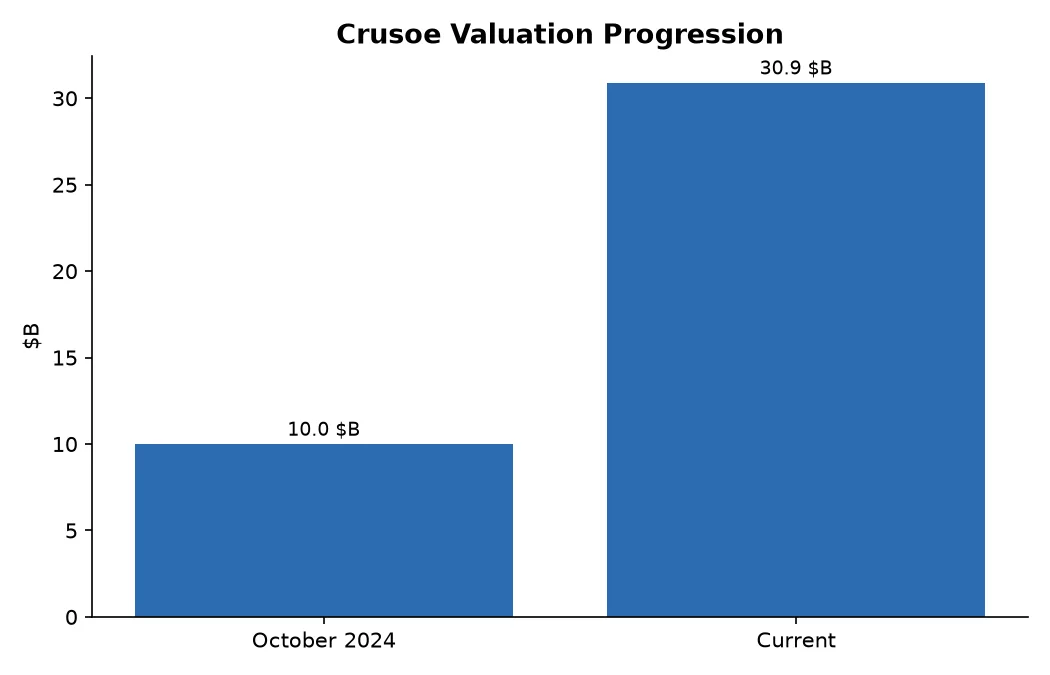
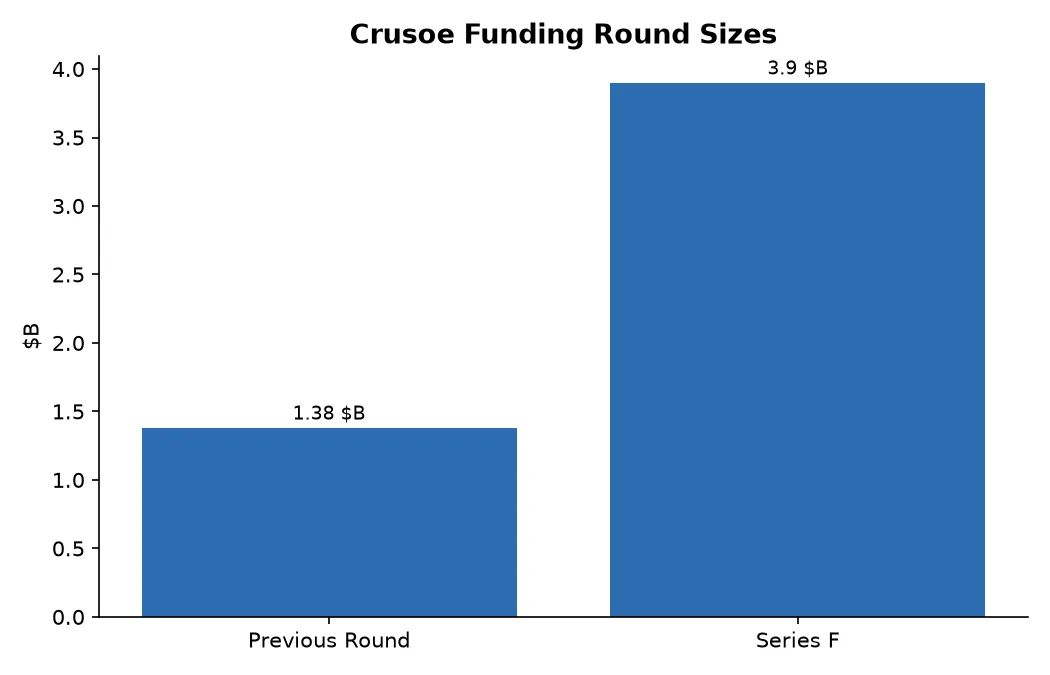
This latest fundraise comes roughly ten months after the company collected $1.38 billion at a $10 billion valuation. The velocity of its growth is extraordinary: in under two years, its valuation has roughly tripled while its contract book has swelled to include some of the biggest names in technology and finance.
From Flare Gas to AI Powerhouse
Crusoe’s journey is as unconventional as its technology. Founded in 2018, the company originally operated as a cryptocurrency mining business powered by flared natural gas — capturing methane that would otherwise be burned off at oil sites. As artificial intelligence demand exploded, the company pivoted its core focus toward AI infrastructure, leveraging its expertise in energy management and data center operations.
Today, its client roster reads like a who’s who of the technology industry, spanning major cloud providers, social media giants, and enterprise software companies. The company’s ability to bridge the worlds of energy and computing positions it uniquely in an era when both sectors are undergoing radical transformation.