The Mechanics of a Flash Collapse
The token entered markets at five cents amid apparent hype, but its liquidity pools lacked the depth to absorb sudden buying pressure. Automated programs designed to detect new token launches immediately snapped up available supply, pushing prices artificially high before dumping positions moments later. This pattern—rapid spike followed by an equally sharp reversal—left latecomers holding tokens worth a fraction of their purchase price. The speed of the collapse underscores how fragile new token markets remain when only small amounts of capital stand between buyers and sellers.
Onchain Data Reveals Trading Imbalance
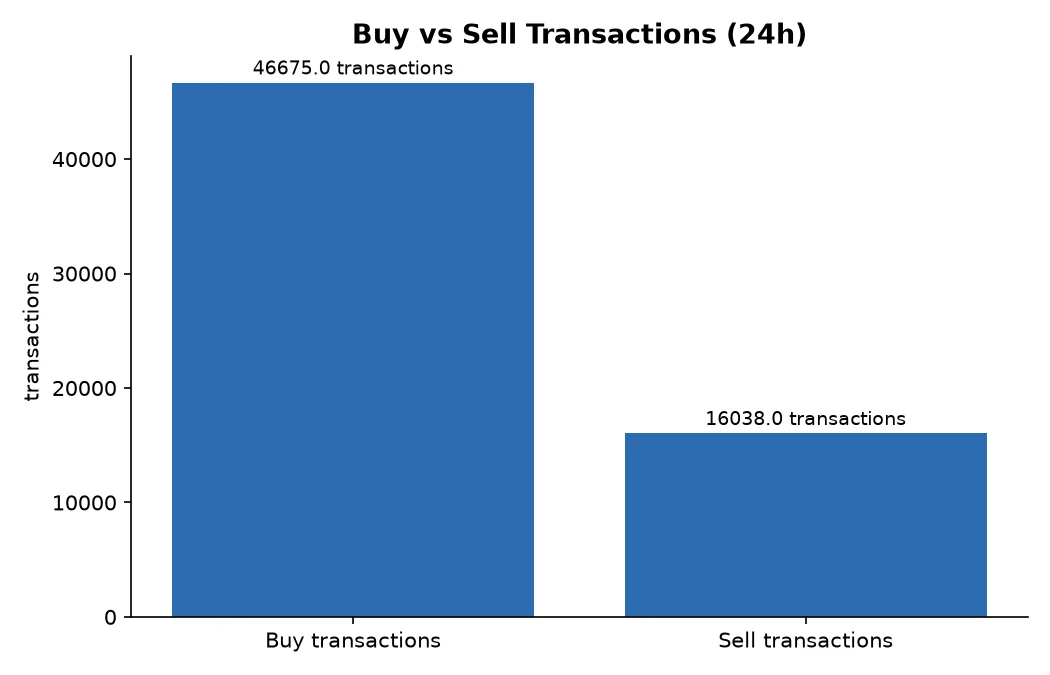
Analytics covering the first 24 hours showed over 46,000 buy transactions against roughly 16,000 sell orders. The buyer pool comprised more than 20,000 unique wallets, compared to under 9,000 sellers. This asymmetry suggests that automated market makers and front-running algorithms dominated the early price action, effectively pricing out typical investors who lacked the technical setup to compete. The sheer volume of buys relative to sells indicates that many participants entered expecting further gains, only to face relentless selling pressure from early arbitrageurs.
Individual Wallet Outcomes Range from Devastating to Modest Gains
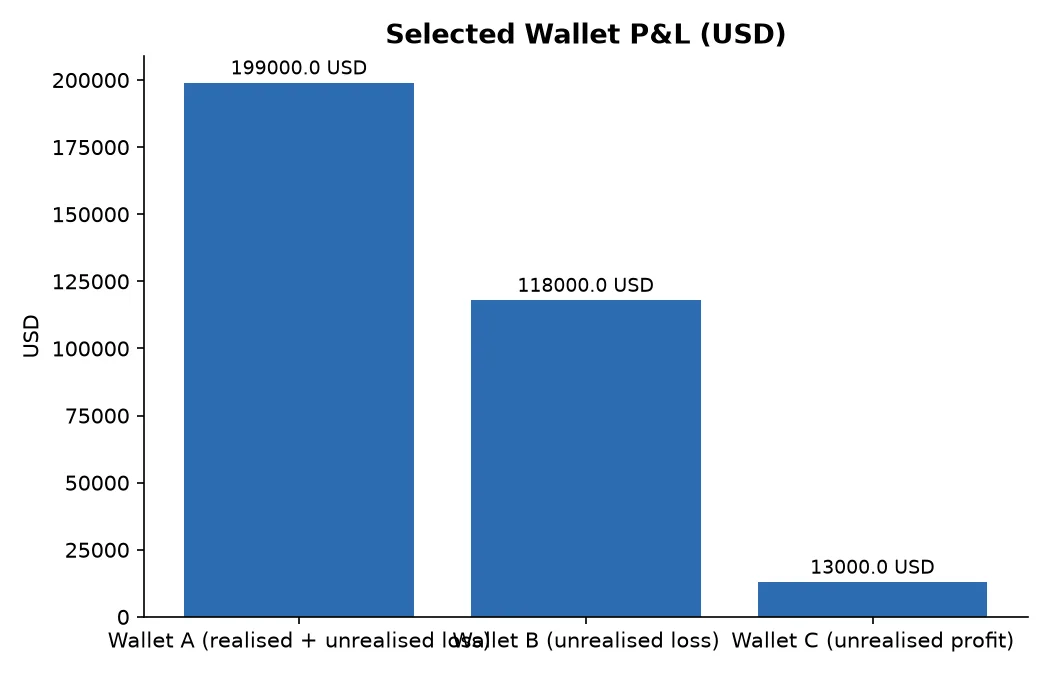
Detailed examination of selected wallets illustrates the human cost of the volatility. One address recorded approximately $199,000 in combined realized and unrealized losses after extracting $171,000 while retaining $27,900 in depreciated holdings. Another wallet, holding roughly 28,400 tokens without selling, faced approximately $118,000 in unrealized losses. In contrast, a third position of nearly 49,700 tokens showed around $13,000 in unrealized profit at the time of measurement, highlighting how timing and position size dramatically altered outcomes. These snapshots reveal that while some traders managed to exit before the worst of the decline, the majority remained exposed to the falling price.
Valuation Metrics Remain Elevated Despite the Crash
Even after the plunge, the token maintained a market capitalization near $720 million and a fully diluted valuation exceeding $2.1 billion. Analysts caution that such figures often inflate newly launched assets because small trades in thin markets produce exaggerated price movements that do not reflect sustainable demand. The gap between market cap and fully diluted valuation also signals that a large portion of tokens remains locked or unissued, meaning future unlocking events could trigger additional selling pressure. For ordinary investors, this disparity serves as a warning that headline market caps can be misleading during the first hours of trading.
Team Defends Transparency and Lockup Structure
The project asserted that no presale existed and no special allocations were reserved for insiders, influencers, or key opinion leaders. All contract details, token allocations, and security audits were published before trading commenced. The team also noted that founder allocations representing 30% of supply remain locked for six months, vesting gradually over two years, while another 30% is subject to a predictions mechanism that either burns tokens or directs them to charity based on predefined event outcomes. These structural safeguards aim to address concerns about insider dumping, though their effectiveness depends on execution over the coming months.
From Political Artifact to Financial Instrument
The token’s name references a laptop left at a Delaware repair shop in 2019, whose contents fueled political attacks across multiple election cycles. By confirming the token on social media and pairing it with news coverage montages, the individual behind the laptop transformed a symbol of personal scandal into a speculative asset. The launch drew immediate criticism from seasoned traders who urged abandoning the project before it began, citing the near-certain probability of retail losses. This episode highlights the growing intersection of political identity and cryptocurrency speculation, where personal narratives drive trading volumes regardless of fundamental value.